
Does Your Manufacturing Team Have the Right Skills? A Practical Guide for Australian Operators

Ask any operations manager in Australian manufacturing what keeps them up at night and the answer is rarely the machines. It is the people running them, and more specifically, whether those people have the right skills to keep everything moving the way it should.
Workforce capability gaps do not always announce themselves loudly. Sometimes it is a quality issue that keeps recurring. Sometimes it is a supervisor who cannot quite hold the team together under pressure. Sometimes it is an operator who looks confident on the floor but quietly struggles when the software changes. By the time a gap becomes a crisis, it has usually been building for a while.
The good news is that most skills gaps can be found, prioritised, and addressed before they cost you. It just takes asking the right questions.
So here they are. Work through these honestly and you will come away with a clear picture of where your workforce is strong and where it needs attention.
1. Core Technical Skills
Start here, because everything else builds on this foundation.
Are all your operators and technicians fully trained on the machinery and equipment they are currently running? Not when it was installed, not when they first started, but right now? Are the required certifications current, including CNC, forklift, and welding tickets? Have any new technologies or processes come in recently that required upskilling, and did that upskilling actually happen or just get scheduled and forgotten?
Also worth asking: is there a shortage of qualified maintenance or mechanical technicians? Are quality control standards being applied consistently across shifts, or is it dependent on who is on that day? Are lean manufacturing and continuous improvement principles genuinely understood and practiced on the floor?
If you are ticking these boxes confidently, your technical foundation is solid. If a few of them gave you pause, that is useful information.
2. Safety and Compliance
In Australian manufacturing, this section is non-negotiable.
Are all employees trained in workplace health and safety for their specific roles? Are safety certificates current across the board, including White Card, Confined Space, and Working at Heights? Are enough people trained in emergency response and first aid, not just the minimum, but enough to cover every shift configuration? Is the team genuinely compliant with Australian safety regulations, and are hazardous materials being handled by qualified personnel only?
With wage theft now a criminal offence and WHS regulators increasing compliance activity across the sector, a gap here is not just an operational risk. It is a legal one.
3. Soft Skills and Workforce Flexibility
These are the gaps that often go unaddressed the longest, because they are harder to measure than a missing ticket.
Do your employees communicate effectively within teams, especially across shifts? Are your supervisors genuinely equipped with leadership and conflict management skills, or were they promoted because they were good on the tools and expected to figure the rest out? Is accountability demonstrated consistently across the floor, or does ownership tend to disappear when things get difficult?
Can your staff adapt to shift changes, overtime, or multi-role requirements without it affecting output? And is absenteeism or punctuality quietly impacting production more than the numbers let on?
Soft skills gaps are often where turnover hides. A technically capable team that does not communicate well, or a supervisor who cannot hold a hard conversation, will eventually push good people out the door.
4. Digital and Data Skills
This one is moving fast and catching a lot of manufacturers off guard.
Are your operators comfortable using digital controls and manufacturing software? Do staff accurately input and interpret production data, or is that being left to one or two people who have figured it out themselves? Is there a genuine need to improve data literacy for continuous improvement purposes?
And as automation becomes standard across more facilities: are staff skilled in managing and troubleshooting automated systems, or does every hiccup require an external call-out?
Digital capability is no longer a nice-to-have in manufacturing. It is increasingly the thing that separates a high-performing facility from one that is falling behind.
5. Specialised and Advanced Skills
Do you have enough skilled welders, electricians, and fitters to cover your current workload and planned growth? Are advanced skills like robotics programming adequately covered in-house, or is that knowledge sitting with one person who has become quietly indispensable?
Is there a shortage of process engineers or production planners? Are the emerging skills your niche demands, whether that is aerospace tolerances, food manufacturing compliance, or something else specific to your operation, genuinely covered in your current team?
These are the roles that take the longest to fill when they are vacant. Knowing where the gaps are now is far better than finding out when someone hands in their notice.
6. Training and Development
Are clear career pathways and training programs available to your people? Do staff know where they can go and what it takes to get there? Are you actively partnering with TAFEs or registered training organisations for apprenticeships, and is ongoing professional development being tracked and encouraged rather than just offered in theory?
Most importantly: are you investing sufficiently in upskilling to future-proof the workforce you already have?
Retention and training are the same conversation in manufacturing right now. The businesses keeping their best people are the ones that show those people a future, not just a roster.
7. Workforce Planning and Recruitment
Finally, step back and look at the whole picture.
Is your workforce size adequate for your current production demands without relying on excess overtime to get through the week? Are you facing high turnover or difficulty filling key roles? Can you realistically attract candidates with the right skills from your local area?
And when a role does open: is your recruitment and onboarding process quick and efficient enough to secure good people before they accept something else?
What to Do With Your Answers
Go back through the questions above and identify your top three urgent skills gaps. For each one, ask: can this be addressed through internal training, or does it require bringing someone new in?
From our conversations with manufacturing businesses across Australia, the ones managing workforce pressure best are the ones that have done this diagnostic work honestly and have a plan for each gap, rather than waiting until a key person walks out the door to act.
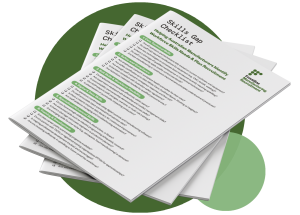
Download our free Skills Gap Checklist to work through this exercise with your team in a structured, printable format.
And if your audit surfaces gaps that need a recruitment conversation, that is exactly what Frontline Manufacturing is here for. We work with Australian manufacturers to find the right people for the floor, the workshop, and the supervisory level. Reach out and let’s talk through what you need.
Sources: Frontline Manufacturing Recruitment, Skills Gap Checklist 2026 · Jobs and Skills Australia, Occupation Shortage List 2025 · HR Leader, Desperation Hires and Skills Gaps: What HR Needs to Know, January 2026 · RSM Australia, Australian Manufacturing 2025-2026: A Sector at the Crossroads, January 2026