
How to Spot and Avoid Job Scams in 2026

A stranger messages you out of nowhere with a role that pays far more than you expected, for far less work than you’d think. A few years ago, that alone would have been the giveaway. In 2026, the scam is polished enough that it isn’t.
Job Scams Have Gotten Harder to Spot, and More Expensive When They Land
In Australia, Scamwatch recorded around 5,500 job scam reports in 2025, with losses reaching $18.5 million, and younger jobseekers were hit hardest. Across the Tasman, Netsafe has tracked a steady rise in fake “work from home” job scams through 2026, with reported losses climbing to almost $80,000 in June alone, and it’s flagged that people job hunting during a tougher market, along with recent migrants, are especially at risk. What’s changed isn’t the scam itself, it’s the disguise. The typos and broken English that used to be the easy tell are gone, replaced by AI generated messages, professional looking fake careers pages, and in some cases entirely fabricated video interviewers.
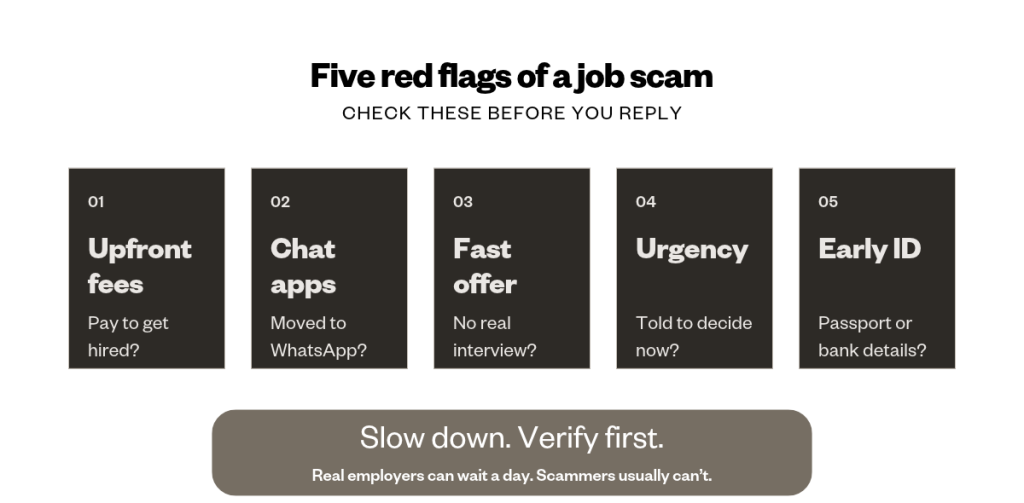
What to Actually Watch For
The warning signs haven’t changed as much as the polish around them has. Be wary of any role that asks for payment upfront, whether that’s framed as training costs, equipment, or a background check fee, since no legitimate employer will ask you to pay to get hired. Be cautious if a recruiter pushes the conversation off official channels and onto WhatsApp or Telegram almost immediately, or if you’re offered a role with little to no real interview process at all. And treat urgency as a red flag rather than a sign of opportunity. Real employers can wait a day for you to think something over. Scammers usually can’t afford to.
How to Protect Yourself Without Becoming Paranoid About Every Application
You don’t need to treat every recruiter message with suspicion, but a couple of quick checks go a long way. Look the company up independently rather than clicking through a link in the message, and check that the person contacting you actually appears on the company’s official website or LinkedIn page. If you’re asked to hand over personal information like passport or bank details early in the process, slow down and ask why it’s needed at this stage, since that’s rarely standard before an offer is made. And if something feels off, trust that instinct enough to pause and verify before you act on it.
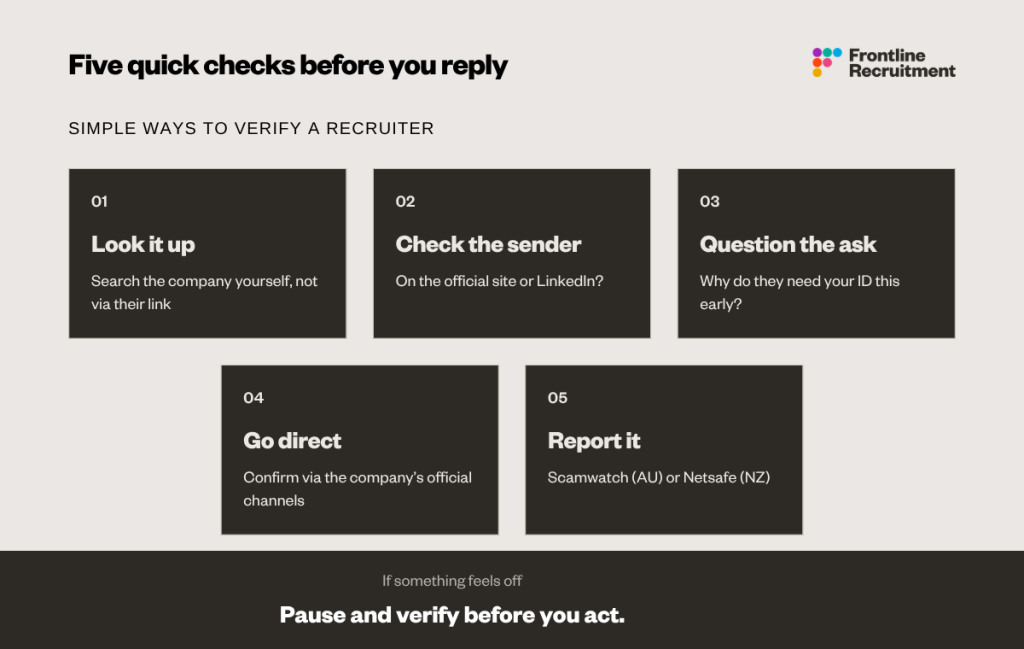
From our conversations with candidates across Australia and New Zealand, the people who avoid these scams aren’t the most cautious or the most tech savvy. They’re the ones who give themselves permission to slow down and check, even when an opportunity feels exciting.
At Frontline Recruitment, every role we advertise comes from a real conversation with a real employer, and our consultants are always contactable through our official channels if you ever want to double check who you’re speaking with. If you’re job hunting right now, browse our latest opportunities or get in touch with your local Frontline team directly.
Sources: Scamwatch (ACCC), Targeting Scams Report 2025 · Netsafe New Zealand, 2026 job scam reporting data